ADVERTISEMENT
ADVERTISEMENT

 (No Ratings Yet)
 Loading...
Fullscreen
ADVERTISEMENT




 (No Ratings Yet)Loading...
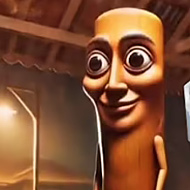
SuperSorry looks like it should be a gentle comedy about a stressed-out office worker apologizing his way through a bad week, but it plays like an acrobatics game that happens to be dressed up in a business suit. You’re not just bowing your head and mumbling an apology here; you’re launching into spinning, jumping bows that would look more at home in a stunt reel than a salaryman’s Tuesday.
| Genre | Action, simulation, comedy |
| Developer | Sun Studio |
| Playable Role | A salaryman navigating everyday mishaps |
| Core Skill | Timed, acrobatic apology bows |
The premise puts you in the shoes of a nameless salaryman who cycles through a string of everyday disasters, a furious boss, an unhappy client, a tense family dinner, and the only tool at your disposal is the art of the apology. SuperSorry calls its signature technique the Super Dogeza, referencing the traditional Japanese bow of deep apology, and stretches that single concept into a full physical comedy game across four distinct scenario types.
Beginners tend to treat every apology the same way, hitting the same basic bow regardless of the situation, which works fine for the earliest scenarios but starts falling apart once the game introduces harsher client complaints and boss reprimands. SuperSorry rewards players who learn its wider move set, including spinning bows and jumping bows, each suited to different escalation levels within a scene. Landing the right technique at the right moment is what separates a clean resolution from a scenario that drags on longer than it needs to.
Difficulty scales primarily through how quickly situations escalate rather than through more complex enemy patterns, since there aren’t traditional enemies here at all, just increasingly absurd everyday troubles. A boss reprimand early in the game moves at a forgiving pace that lets new players learn the timing windows, while later client-complaint scenarios demand much tighter execution, which is where most of the community’s genuine strategy discussion tends to focus.
SuperSorry sets its scenarios across the office, client sites, home, and public spaces, and while the core bowing mechanics stay consistent, each location reframes the same skillset around a different social pressure. The home scenarios in particular pull toward a more personal, family-conflict tone that contrasts with the workplace stages, giving the game a surprising amount of tonal range for something built around a single core action.
Players approaching SuperSorry as a straightforward comedy game often get caught off guard by how mechanically demanding the later stages actually get, since the title’s lighthearted marketing undersells the precision the bowing system eventually requires. Others come in expecting a rhythm-action structure and find the timing-based bow system scratches a similar itch, even though it’s framed entirely around comedic apology rather than music.
The Super Dogeza is the game’s signature exaggerated apology bow, built around the real dogeza gesture of prostrating oneself as a sign of deep apology, and it forms the core input the player executes across every scenario in different acrobatic variations.
There’s no combat in the traditional sense. Every conflict in SuperSorry, whether it’s a furious boss or an unhappy client, gets resolved through the bowing system rather than through any kind of physical confrontation, which is part of what makes the game’s comedic premise hold together mechanically as well as tonally.
Community opinion generally points to the client-complaint scenarios as the toughest, since they compress tighter timing windows into shorter sequences compared to the more forgiving pacing of the earlier boss reprimand stages.
SuperSorry commits fully to a joke that could have worn thin after one scenario, and instead stretches its apology-bow mechanic across office, client, home, and public settings without ever losing the thread. Whether you’re chaining a spinning bow into a jumping bow to defuse a furious client, the game keeps finding new stakes for the same absurd, oddly earnest core idea.
There are no reviews yet. Be the first one to write one.



![Hello Kitty [HORROR]](https://granny3enhanced.com/wp-content/uploads/2025/03/hello-kitty-horror.jpg "Hello Kitty [HORROR]")